The Maasai Mara is one of the most celebrated wildlife destinations on earth — and for good reason. Whether you want to witness the legendary Great Wildebeest Migration, track the Big Five, or simply experience Africa at its most raw and beautiful, timing your visit correctly makes all the difference.
At Kega Safaris, we have helped hundreds of travellers plan their Maasai Mara safari. In this guide, we break down every season so you can choose the perfect time for your trip.
⭐ Quick answer: The best time to visit Maasai Mara is July to October — the peak of the Great Migration when millions of wildebeest cross the Mara River in one of nature's most dramatic spectacles.
Maasai Mara Seasons at a Glance
| Month | Season | Wildlife | Crowds | Price |
|---|---|---|---|---|
| January – March | Dry | Excellent | Low | Moderate |
| April – June | Green / Long Rains | Good | Very Low | Low |
| July – October | Peak / Migration | Outstanding | High | High |
| November – December | Short Rains | Very Good | Low | Moderate |
July – October: The Great Migration Season
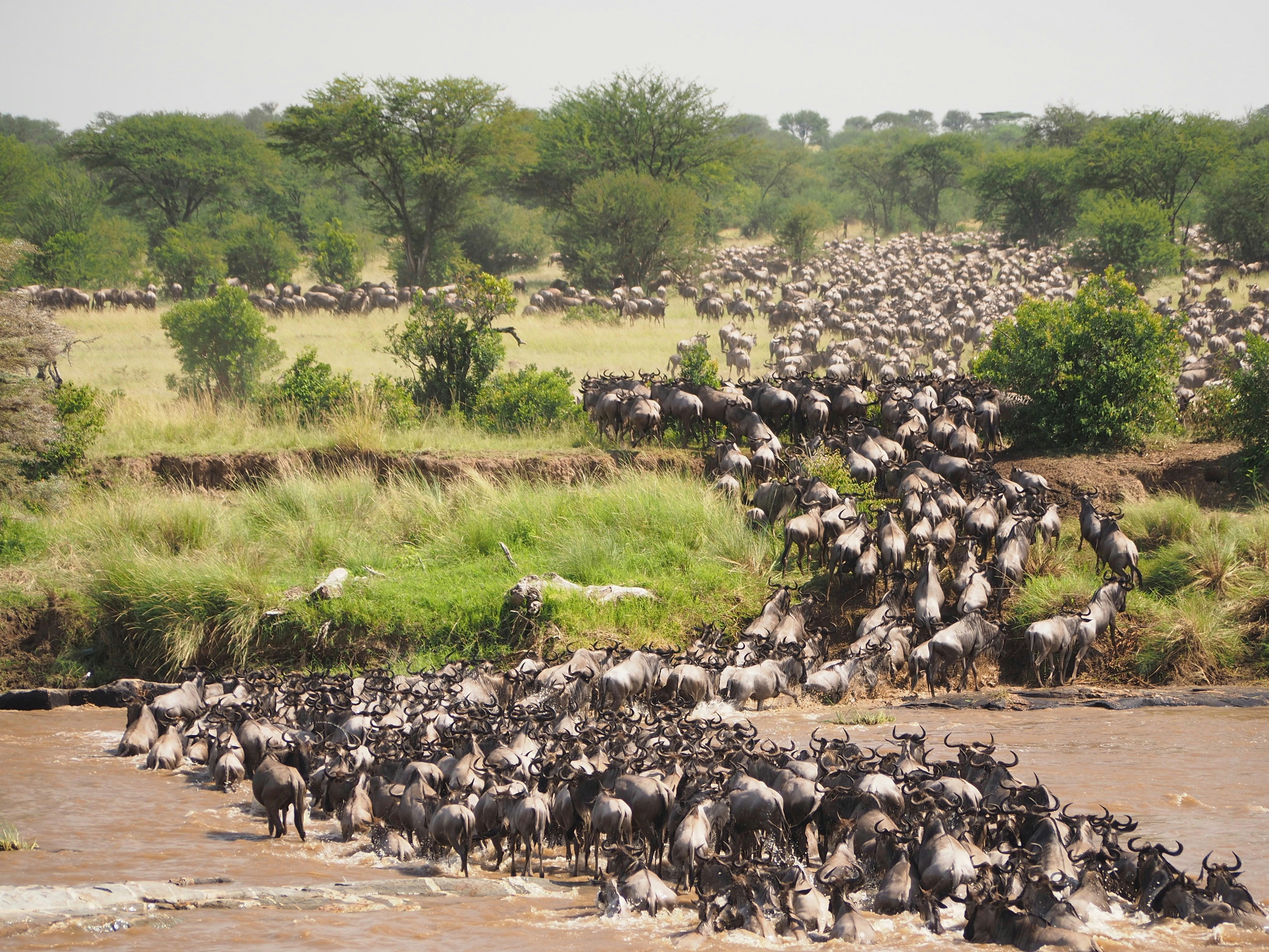
This is the crown jewel of the Maasai Mara calendar. Between July and October, over 1.5 million wildebeest, accompanied by hundreds of thousands of zebras and gazelles, make their epic journey from Tanzania's Serengeti into Kenya's Maasai Mara in search of fresh grass.
The river crossings — where massive herds plunge into the crocodile-filled Mara River — are among the most thrilling wildlife spectacles on the planet. These crossings happen unpredictably, often multiple times a day, and witnessing one is an experience you will never forget.
What to expect July – October
- Daily wildebeest and zebra river crossings at key points along the Mara River
- High concentrations of predators — lions, cheetahs, leopards — following the herds
- Dry weather with clear skies, ideal for photography
- Temperatures between 15°C and 28°C — comfortable game drive weather
- Lodges and camps fill up quickly — book at least 3 months in advance
🦁 Pro tip: Book a hot air balloon safari during this season. Floating above the migration herds at sunrise is a once-in-a-lifetime experience. Kega Safaris can arrange this for you — contact us for pricing.
January – March: Dry Season
January to March is an excellent time to visit Maasai Mara, especially if you want to avoid peak-season crowds while still enjoying outstanding game viewing. The vegetation is lower after the rains, making animals easier to spot.
This period is also calving season for wildebeest — thousands of young animals are born on the plains, attracting large numbers of predators. Watching a cheetah hunt or a pride of lions with cubs is a highlight of this season.
What to expect January – March
- Wildebeest calving season — dramatic predator action
- Fewer tourists than peak season — more exclusive game drive experience
- Good road conditions and clear game viewing
- Warm days around 26°C and cool nights around 14°C
- More affordable lodge rates than July–October
April – June: Green Season
April to June is the long rainy season in Kenya. While some travellers avoid this period, it is actually a hidden gem for budget-conscious safari goers and photography enthusiasts. The landscape transforms into a lush, vibrant green that is truly spectacular.
Wildlife is still abundant — in fact, birdlife is at its peak with hundreds of migratory species present. Lodges offer their lowest rates of the year, sometimes 30–50% cheaper than peak season.
What to expect April – June
- Lush green landscapes — stunning for photography
- Lowest lodge prices of the year — great value
- Excellent birdwatching with migratory species
- Afternoon showers — game drives are best in the morning
- Some roads may be muddy — 4WD vehicles required
November – December: Short Rains
November and December bring the short rains — lighter and less predictable than the long rains. This is another great value period with fewer crowds and beautiful scenery. The wildebeest herds have moved back to the Serengeti, but resident wildlife remains excellent.
December is also popular with families travelling during the Christmas holiday period, so expect slightly more visitors toward the end of the month.
Top Tips for Planning Your Maasai Mara Safari
- Book early for peak season — the best camps sell out 6–12 months in advance for July–October
- Stay at least 3 nights — the Mara rewards patience; more time means better sightings
- Hire a private guide — an experienced guide dramatically improves your wildlife encounters
- Pack layers — mornings on the Mara can be very cold even in the dry season
- Bring a good camera — the light in the Mara is extraordinary, especially at golden hour
- Respect the wildlife — keep quiet and stay in the vehicle at all times during game drives
📞 Ready to plan your Maasai Mara safari? Contact Kega Safaris today for a free, personalised itinerary. We will handle everything — flights, accommodation, transfers, and expert guides. Get your free quote within 2 hours.